Carrot Seeds - Danvers
🌱 Approx. 2,000 Premium Seeds
(Non-GMO, Heirloom)
Danvers Carrot – The Dependable Heirloom Champion for Heavy Soils and Rich Flavor
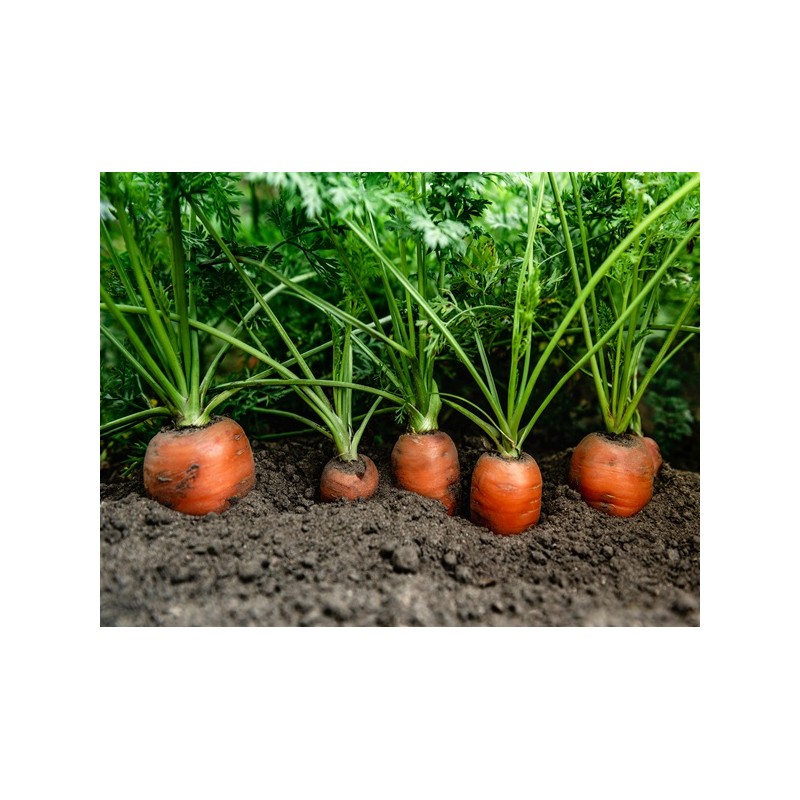
Danvers (often called Danvers Half Long) is the go-to carrot for gardeners who struggle with heavy or clay-based soils. While other carrots might struggle to grow straight or become stunted in tough ground, Danvers pushes through with a strong, tapered root that reaches 6-8 inches in length. Developed in Danvers, Massachusetts, in the late 1800s, this variety was bred specifically to be a reliable producer for market gardeners. At The Seed Guy, we recommend this variety because it is incredibly reliable and produces a crisp, sweet root with a deep orange core that holds its color beautifully.
The flavor of Danvers is rich and traditional, making it a favorite for stews, roasting, and snacking. Because of its sturdy structure and thick skin, it is one of the best heirloom carrots for long-term storage in a root cellar or refrigerator. Any vegetable that can go from seed to table while providing both a stunning visual and incredible flavor is a gardener's dream, and Danvers is an heirloom workhorse that provides a massive nutritional punch of Beta-Carotene and Vitamin A.
Why choose heirloom Danvers Carrot Seeds
✅ 100% Non-GMO
✅ Open-pollinated
✅ Specially adapted to thrive in heavy or clay soils
✅ Uniform, tapered 7-inch roots
✅ Excellent storage capability for winter use
✅ Rich in Beta-Carotene and Vitamin A
✅ High resistance to splitting and breaking
✅ Classic sweet carrot flavor
| 🥕 SPRING STRATEGY: Don't wait for summer! Learn how to maximize your early season with our guide on 8 Essential Spring Root Vegetables and kickstart your food security today with The Seed Guy®. |