
keyboard_arrow_rightkeyboard_arrow_left
(Non-GMO, Heirloom)
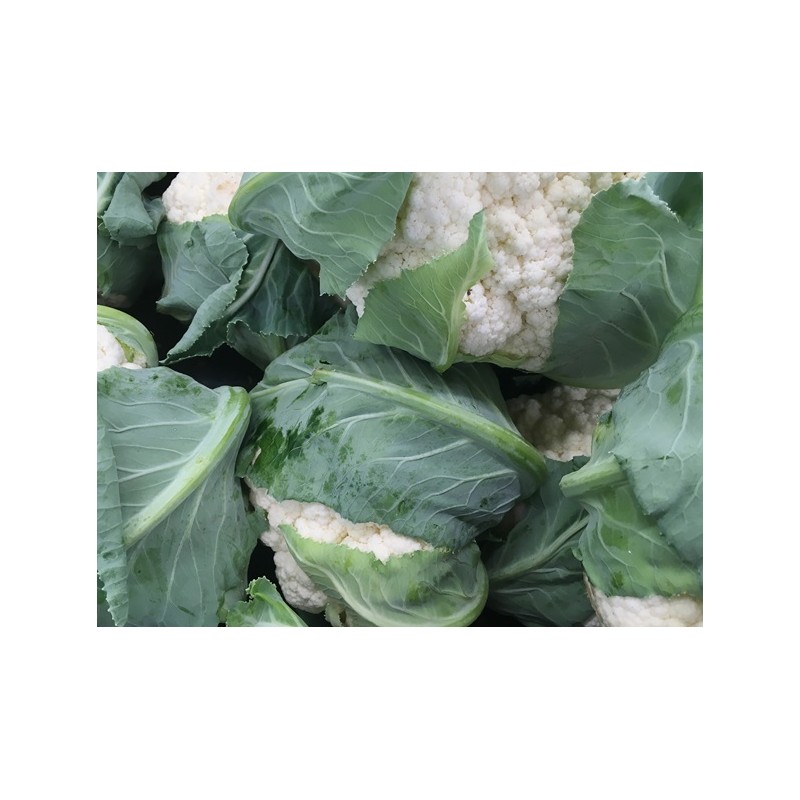
Snowball Cauliflower is the most popular heirloom variety for home gardeners, prized since the late 1800s for its snowy-white, tight curds and dependable performance. At The Seed Guy, we recommend this variety because it is a vigorous grower that produces solid, 6-to-8-inch heads that are heavy for their size. One of the standout features of the Snowball variety is its "self-blanching" tendency, where the inner leaves naturally wrap upward to protect the developing head from the sun, ensuring the cauliflower remains a beautiful, creamy white rather than turning yellow.
The flavor of Snowball is mild, sweet, and nutty, making it the premier choice for steaming, roasting, or enjoying raw on a vegetable platter. Because it matures relatively quickly compared to other varieties, it is an excellent choice for both spring and fall gardens. Any vegetable that can go from seed to table while providing both a stunning visual and incredible flavor is a gardener's dream, and Snowball Cauliflower is a nutritious, high-yielding champion that provides a massive harvest of Vitamins C and K.
Why choose heirloom Snowball Cauliflower Seeds
✅ 100% Non-GMO
✅ Open-pollinated
✅ Pure white, dense heads with a crisp texture
✅ Self-blanching leaves protect the head from sun damage
✅ Mild, sweet flavor without the bitterness of store-bought varieties
✅ Excellent for freezing, pickling, or fresh eating
✅ Rich in antioxidants and essential nutrients
✅ A reliable heirloom favorite for over 100 years
 Delivery policy - Current processing time is 3-5 days, order then ships via USPS Priority or USPS First Class Mail.
 Security policy - Site has a valid certificate issued by a trusted authority, credit card information is secure.
 Return policy - because these are Heirloom seeds, no returns will be allowed and all orders are final.
Quick Growing Specifications:
Hardiness Zone: 3-10
Days to Maturity: 70-80 Days
Planting Depth: 1/4" to 1/2" Deep
Plant Spacing: 18-24" Apart
Germination: 7-10 Days
Snowball Cauliflower Planting Instructions:
1. Timing: Cauliflower is a cool-weather crop. Start seeds indoors 4-6 weeks before the last frost, or sow in mid-summer for a fall harvest.
2. Sowing: Sow seeds 1/4 to 1/2 inch deep. If starting indoors, transplant seedlings to the garden once they have 4-5 true leaves.
3. Care: Provide consistent moisture and a steady supply of nitrogen. If the leaves do not naturally cover the head, tie the outer leaves together with twine once the head is the size of a golf ball.
4. Harvesting: Harvest when the head is 6-8 inches in diameter and the curds are still tight and compact.
5. Pests & Disease: Protect against Cabbage Loopers and Root Maggots using row covers. Maintaining consistent moisture helps prevent "buttoning" (premature small heads).
Specific References
(Non-GMO, Heirloom)
Snowball Cauliflower is the most popular heirloom variety for home gardeners, prized since the late 1800s for its snowy-white, tight curds and dependable performance. At The Seed Guy, we recommend this variety because it is a vigorous grower that produces solid, 6-to-8-inch heads that are heavy for their size. One of the standout features of the Snowball variety is its "self-blanching" tendency, where the inner leaves naturally wrap upward to protect the developing head from the sun, ensuring the cauliflower remains a beautiful, creamy white rather than turning yellow.
The flavor of Snowball is mild, sweet, and nutty, making it the premier choice for steaming, roasting, or enjoying raw on a vegetable platter. Because it matures relatively quickly compared to other varieties, it is an excellent choice for both spring and fall gardens. Any vegetable that can go from seed to table while providing both a stunning visual and incredible flavor is a gardener's dream, and Snowball Cauliflower is a nutritious, high-yielding champion that provides a massive harvest of Vitamins C and K.
Why choose heirloom Snowball Cauliflower Seeds
✅ 100% Non-GMO
✅ Open-pollinated
✅ Pure white, dense heads with a crisp texture
✅ Self-blanching leaves protect the head from sun damage
✅ Mild, sweet flavor without the bitterness of store-bought varieties
✅ Excellent for freezing, pickling, or fresh eating
✅ Rich in antioxidants and essential nutrients
✅ A reliable heirloom favorite for over 100 years